My research applies data science, machine learning, and mechanistic modelling to predict the outbreak risk of infectious diseases, focusing on how climatic, ecological, socioeconomic, and mobility factors shape disease emergence and spread. Much of my recent work concerns the climate-driven expansion of vector-borne diseases across Europe — West Nile virus, dengue, and chikungunya — and the methods needed to forecast and monitor them.
Featured first-author studies
Peer-reviewed publications
The 2026 Europe report of the Lancet Countdown on health and climate change: narrowing window for decisive health action. The Lancet Public Health, 11(6):e386–e407, 2026. Contributing author. Record on DiVA
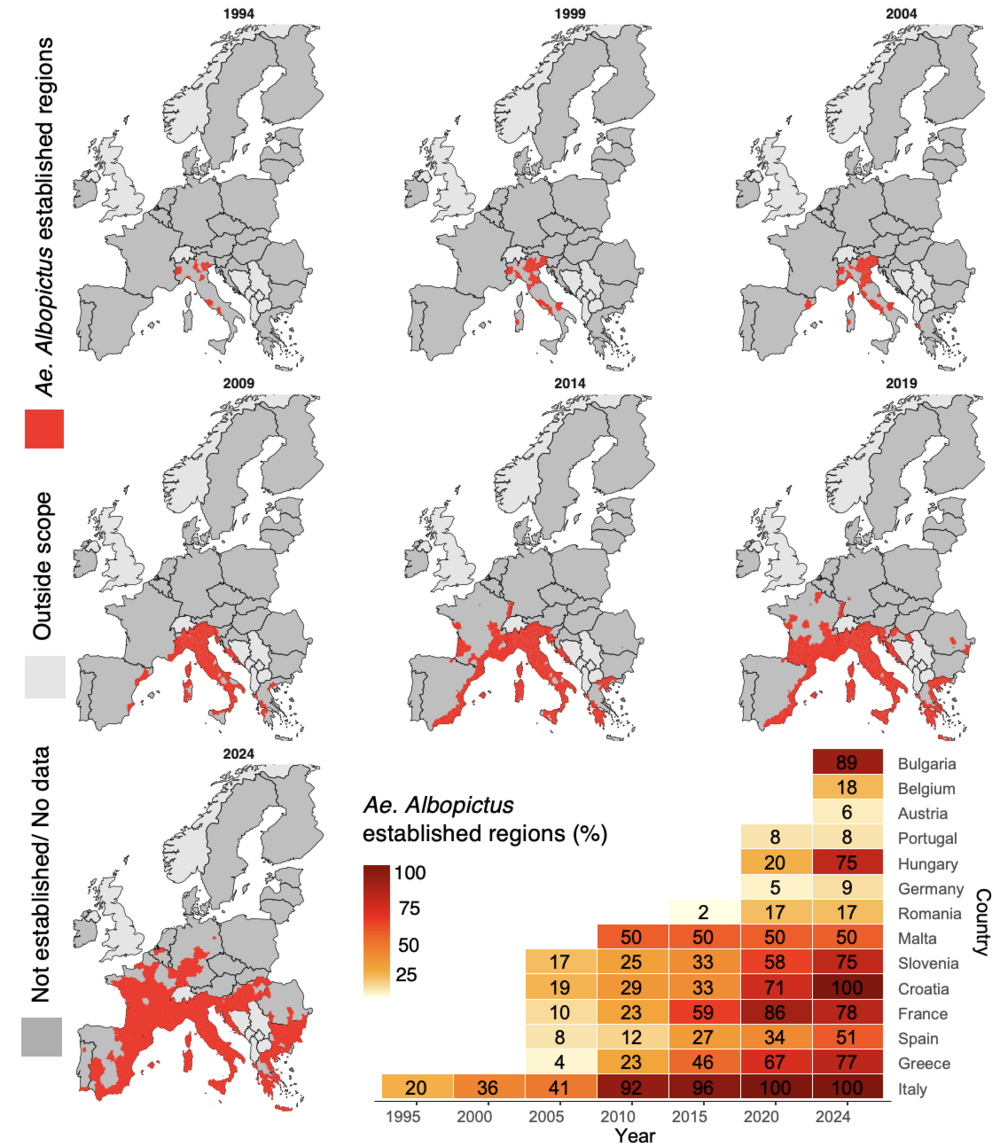
Northward expansion of Aedes albopictus-associated arbovirus transmission risk in Europe. The Lancet Planetary Health, 9(12):101378, 2025. First author (Farooq, Rocklöv, Semenza). Characterises the accelerating northward spread of Aedes albopictus and the associated expansion of arbovirus transmission risk. DOI: 10.1016/S2542-5196(25)00256-6
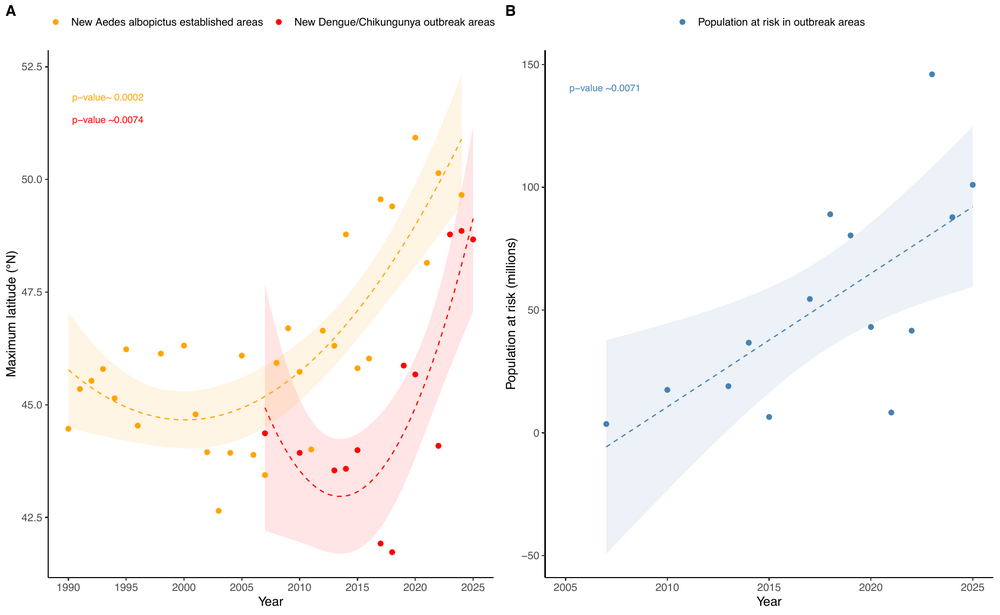
Impact of climate and Aedes albopictus establishment on dengue and chikungunya outbreaks in Europe: a time-to-event analysis. The Lancet Planetary Health, 9(5):e374–e383, 2025. First author. A time-to-event analysis showing that the interval from vector establishment to first outbreak fell from 25 years to under 5 years (1990–2024), with a projected near five-fold increase in outbreaks by the 2060s under SSP5–8.5. DOI: 10.1016/S2542-5196(25)00059-2 · Code on GitHub
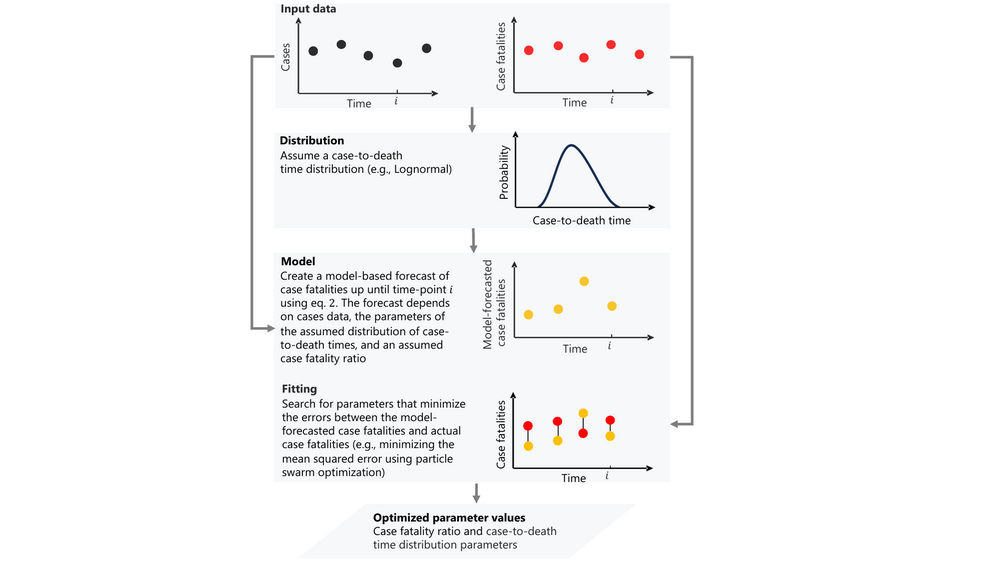
Improving case fatality ratio estimates in ongoing pandemics through case-to-death time distribution analysis. Scientific Reports, 15:5402, 2025. First author. A distributed-delay method that estimates the case fatality ratio from routine case and death time series, reducing bias in early-outbreak estimates. DOI: 10.1038/s41598-025-89441-y
Input precision, output excellence: the importance of data quality control and method selection in disease risk mapping — authors’ reply. The Lancet Regional Health – Europe, 42:100947, 2024. DOI: 10.1016/j.lanepe.2024.100947
The 2024 Europe report of the Lancet Countdown on health and climate change: unprecedented warming demands unprecedented action. The Lancet Public Health, 9(7):e495–e522, 2024. Contributing author. DOI: 10.1016/S2468-2667(24)00055-0
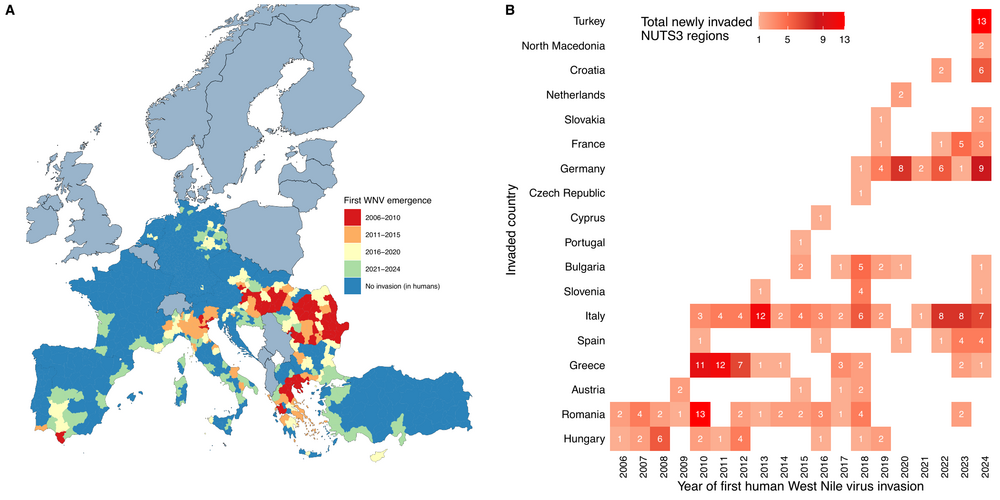
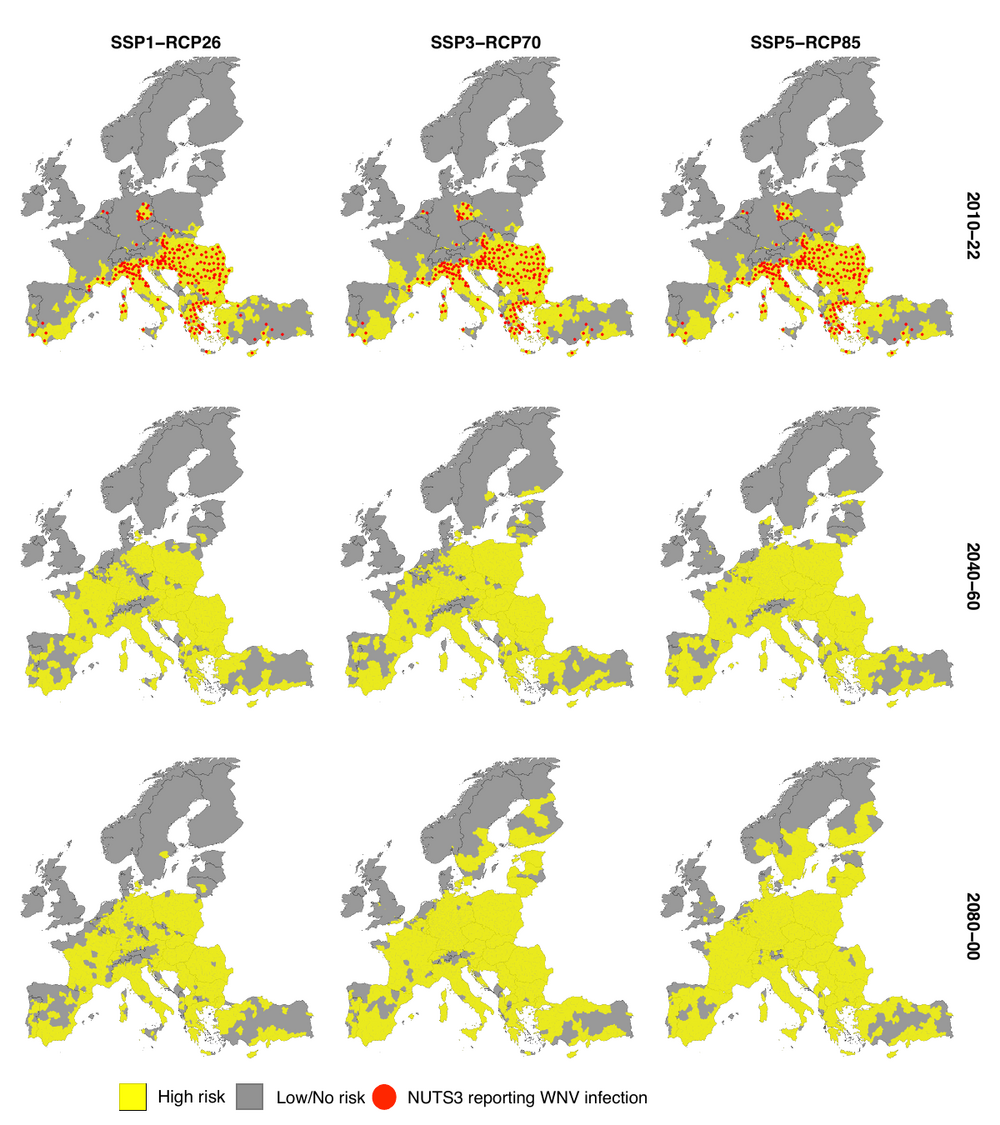
European projections of West Nile virus transmission under climate change scenarios. One Health, 16:100509, 2023. First author. DOI: 10.1016/j.onehlt.2023.100509 · Lancet Countdown WNV indicator code
Decision-support tools to build climate resilience against emerging infectious diseases in Europe and beyond. The Lancet Regional Health – Europe, 32:100701, 2023. DOI: 10.1016/j.lanepe.2023.100701
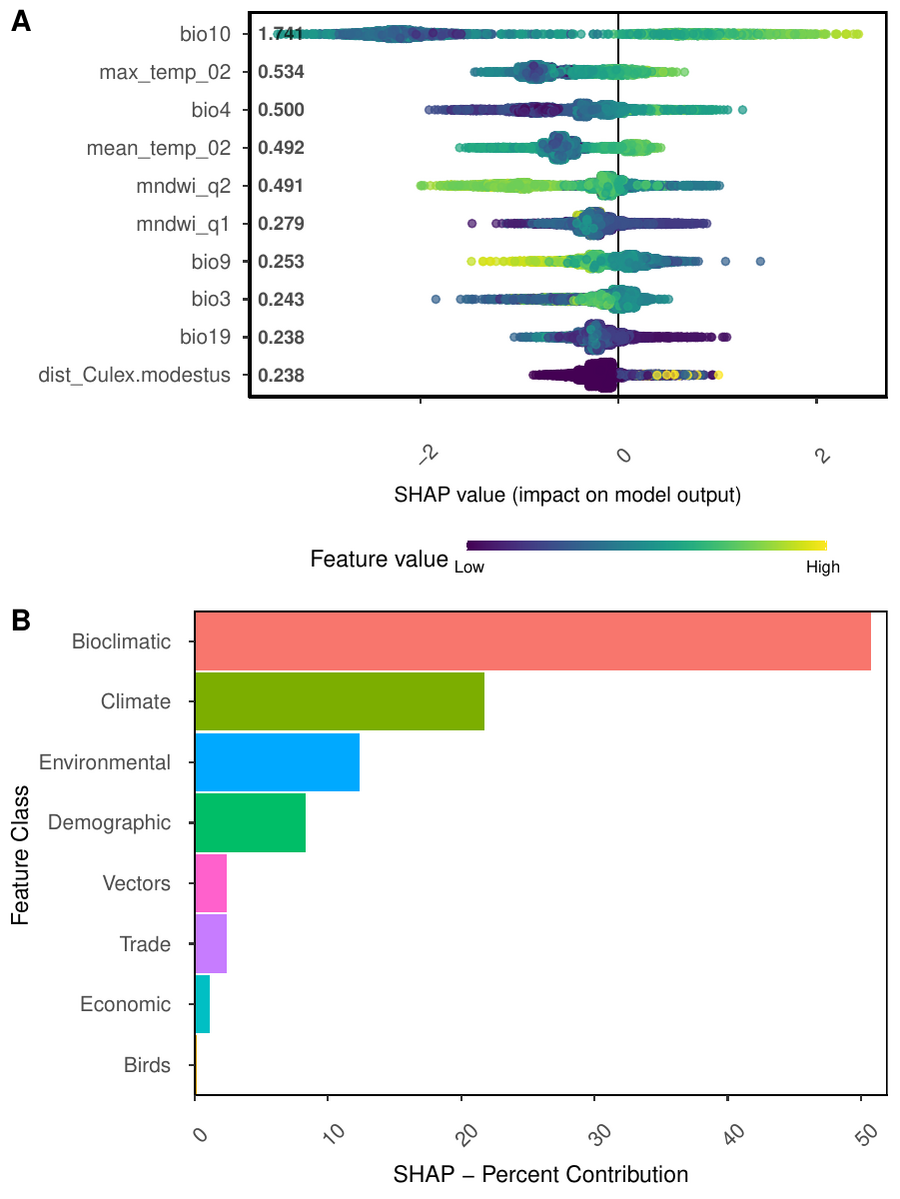
Artificial intelligence to predict West Nile virus outbreaks with eco-climatic drivers. The Lancet Regional Health – Europe, 17:100370, 2022. First author. DOI: 10.1016/j.lanepe.2022.100370 · Code on GitHub
The 2022 Europe report of the Lancet Countdown on health and climate change: towards a climate resilient future. The Lancet Public Health, 7(11):e942–e965, 2022. Contributing author. DOI: 10.1016/S2468-2667(22)00197-9
COVID-19 healthcare demand and mortality in Sweden in response to non-pharmaceutical mitigation and suppression scenarios. International Journal of Epidemiology, 49(5):1443–1453, 2020. DOI: 10.1093/ije/dyaa126
Only strict quarantine measures can curb the coronavirus disease (COVID-19) outbreak in Italy, 2020. Eurosurveillance, 25(13):2000280, 2020. DOI: 10.2807/1560-7917.ES.2020.25.13.2000280
Information processing in unregulated and autoregulated gene expression. 2020 European Control Conference (ECC), 258–263, 2020. DOI: 10.23919/ECC51009.2020.9143952
Bifurcation analysis of heartbeat model. Journal of Space Technology, 2017. First author.
PhD thesis
Navigating epidemics by leveraging data science and data-driven modelling. Umeå University Medical Dissertations 2305, 2024. Record on DiVA
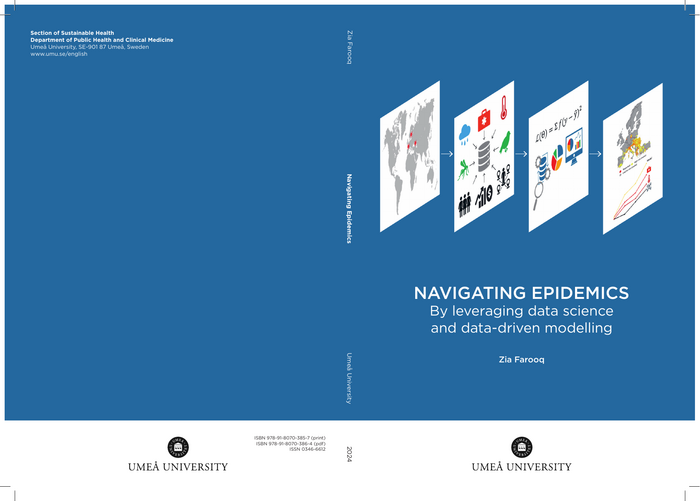
My public defence (disputation) was held on 03 June 2024 at Umeå University, and the doctoral degree was conferred at the graduation ceremony on 24 May 2025.


Manuscripts under review & in preparation
Human mobility and climate change are escalating the transcontinental threat of dengue. First author (Farooq, Semenza, Rocklöv, Singh, Sjödin) — to be submitted, 2026. Couples global human-mobility networks with climatic suitability to assess the spread of dengue from endemic to non-endemic regions.
Comparing machine learning and process-based projections of West Nile virus transmission suitability under climate change scenarios in Europe. Heidecke, Kriit, Farooq, Dafka, Rocklöv — under review, PLOS Computational Biology, 2026.
The 2027 Europe report of the Lancet Countdown on health and climate change. Contributing author — forthcoming, 2027.
Climate change attribution and projections of infectious diseases. Co-author — forthcoming, 2027.
Socioeconomic vulnerability shapes the spatiotemporal distribution of malaria risk in Punjab, Pakistan. Asif M, Semenza JC, Farooq Z — senior author, supervising the first-author PhD student; in preparation, 2026.
Selected code repositories
- WNV_drivers_study — machine learning to identify eco-climatic drivers of West Nile virus outbreaks (R).
- LancetEurope_WNV — scripts reproducing the Lancet Countdown Europe West Nile virus indicator.
- Time2Event — time-to-event analysis of dengue and chikungunya outbreaks in Europe.
- matlab-optimisation — ODE parameter optimisation using parallel and multistart methods.